Introduction — The Role of Digital Tools in Piano Learning
It’s already impossible to imagine modern piano learning without digital solutions that complement the traditional pedagogical approach. Not assistants but full-fledged partners in the educational process are innovative applications and platforms offering flexibility, interactivity, and accessibility. Such tools can make changes in assignments according to the peculiarities of the work of each student and significantly expand the range of teaching material. As part of this shift, teacher tools, homework drills, student reinforcement, progress reports, and Talented for instructors help educators blend human guidance with data-driven insights without replacing the teacher’s artistry.
The teacher’s role is not canceled by turning to the digital space, but rather the format of interaction with a student changes: one can focus their attention on creative development and analysis of progress, as well as effective motivation. Introduction of modern technologies opens new horizons in piano lessons—from instant feedback to the integration of different types of homework, which go beyond mere repetition.
What Talented Is and Why It Suits Homework
Our application is designed to focus on learning piano and homework optimization. Some of the main advantages which make this platform stand out from many can be enlisted as follows:
Interactivity: Assignments are given in a format that encourages active participation on the part of the student, sometimes by playing with key highlighting, note recognition or rhythmic exercises.
- Flexible difficulty adjustment: assignments can be adapted for a certain level of preparation without feeling overwhelmed.
- Variety of formats: from theoretical tests to practical exercises granting immediate feedback, with the goal of diversifying and deepening the learning process.
- Convenient control system: homework can be easily created and sent by the teacher as well as detailed reports on results and progress received.
As a classroom companion and a home practice ally, Talented functions like the best free app learn piano option when teachers want quick setup and clear visibility across tasks, while still preserving pedagogy first.
Now, to clearly illustrate the capabilities of the platform, here goes the table with examples of homework types and features:
| Assignment Type | Description | Benefit for the Student |
| Interactive exercise | Playing notes with key highlighting | Improving accuracy and memorizing notes |
| Rhythmic test | Determining the correct rhythm | Developing musical hearing |
| Theoretical quiz | Assesses the knowledge of music theory | Reinforcing basic concepts |
| Self-recording of performance | Sending recording, up to 5 minutes long | Teacher’s analysis and error correction |
Thus, the homework platform becomes an indispensable tool for homework, making it more structured, varied, and motivating. These features also help instructors streamline progress reports and sustain student reinforcement between lessons.
Methods for Reinforcing Material Through Features of the Interactive Platform
A key task in the sustainable skill development of pianists is to consolidate the learning material. Talented offers a set of tools that make this process effective but at the same time engaging.
Key reinforcement methods via Talented include:
- Recurring interactive exercises. Regular revisiting of covered topics in interactive task formats contributes to long-term memorization.
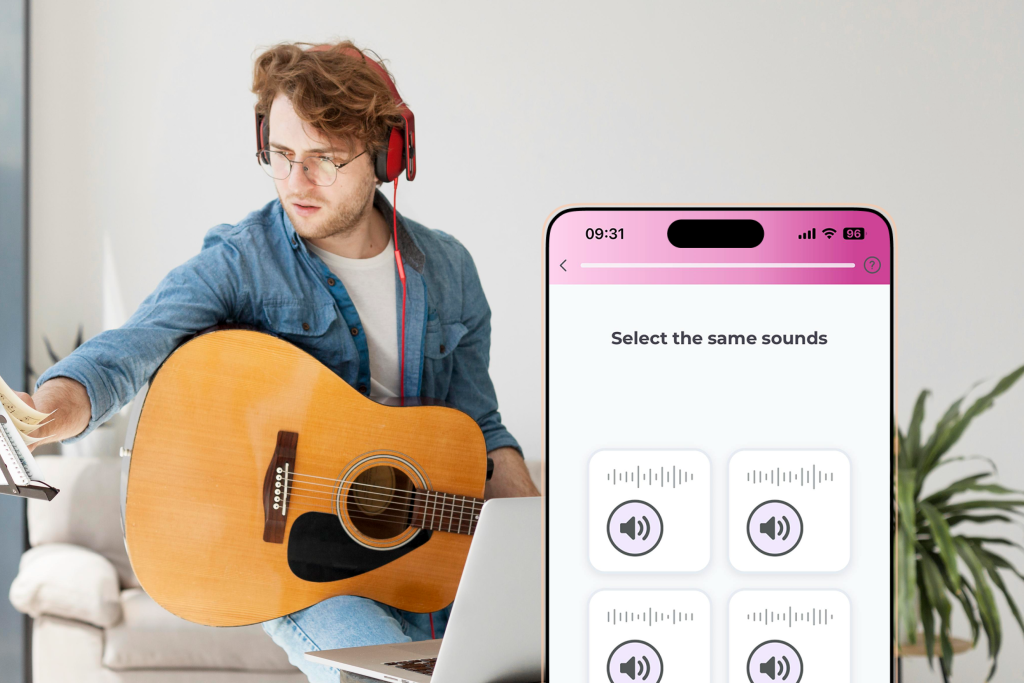
- Visual hints and feedback. The platform immediately informs one about any errors made and ways to correct them, thereby speeding up self-analytics.
- Game elements and challenges. Built-in mini-games and competitive tasks create an atmosphere of healthy motivation and stimulate interest in repeating material.
- Multisensory approach. The integration of sound, visuals, and note interaction enhances perception for knowledge reinforcement at different levels.
Besides, built-in functions enable the teacher to follow the progress of students over time, establish problem areas, and make timely adjustments to the teaching approach. All these Talented capabilities make the reinforcement process dynamic and creative, thus inspiring learners toward continuous improvement. These feedback loops and homework drills double as lesson reinforcement and student engagement drivers.
Individual Approach — Talented’s Adaptation Capabilities According to Student Level
A student is unique; it is a direct dependence of learning effectiveness in consideration of individual characteristics.
Thanks to Talented’s flexible platform settings, this becomes possible.
How a piano teacher can use these possibilities to maximize the results in homework is what let us see.
A. Difficulty adaptation in exercise:
With Talented, one can not only select from pre-defined levels but also adjust all the parameters of the assignments independently: number of repetitions, tempo, note range.
This becomes important when a student begins to master the new material at different rates, or if the student experiences difficulty in certain areas.
Customization of content:
A teacher can create playlists and exercises that are aimed at the specific goals and interests of a student.
For example, if the teenager likes jazz pieces, then the inclusion of compositions of this genre in homework can increase motivation sharply. Moreover, Talented provides tools for visual and audio analysis of performance: This would mean that the teacher could highlight all the weak spots of every student and set exercises to practice just those fragments. * It can be used to reinforce complicated techniques or rhythmic patterns progressively while gradually increasing the level of difficulty.
Key advantages of adaptation in Talented include:
Flexible adjustment of exercises according to difficulty and theme, depending on the curriculum requirements.
Capability to create individual tasks and repertoire.
Feedback based on the analysis of a student’s playing.
Support for several styles and genres of music.
Gradual increase in difficulty, depending on progress level.
Thus, Talented is not just a homework platform but a full-scale tool that will enable the teacher to follow achievements and deeply individualize the learning process. This approach significantly enhances lesson effectiveness, making each lesson and homework task maximally tailored to the needs of a particular student. Such Talented for instructors flexibility elevates home practice and aligns with remote teaching realities.
Analytics and Feedback — How to Use Reports for Progress Control
Control and understanding of learning dynamics are major elements that constitute a teacher’s work.
That is why our platform provides a powerful analytics tool for following the achievements of each student and adjusting the lesson plan on-the-fly.
The major features unlocked with access to reports include the following:
- Detailed statistics on task completion.
Every single lesson and every exercise is reflected in the system, showing time taken to complete, number of errors, and overall accuracy of execution. It helps pinpoint problem areas on which more focus should be made during subsequent lessons. - Real-time progress tracking.
The results are available immediately after finishing homework, reducing the time between completion and analysis. The teacher no longer has to wait until the next lesson to see the change in skill levels. - Comparison with previous periods.
It allows analyzing the development dynamics of the students: whether there is any growth or stagnation, and where spikes in productivity take place, using visual diagrams and charts. - Individual recommendations.
Based on the data accumulated in the system, recommendations are provided according to improvement in the learning process, which of the exercises need to be repeated, and which can be given less emphasis.
What the teacher receives as a result:
- A clear picture of each student’s strengths and weaknesses;
- The ability to promptly adjust homework according to real needs;
- An effective tool for reasoned communication with parents and the student themselves.
Moreover, feedback on the platform is designed in such a way as to enable the student to see their progress. This contributes to motivation and the formation of the habit of self-analysis. After all, it is only the right approach to analytics and timely data analysis that turns the learning process into a flexible, personalized, highly productive one — and making this process as easy and transparent as possible for every educator is just what we are working for. In practice, these progress reports provide instructor insights, performance analytics, and routine progress updates that make class management simpler.
Tips for Motivating Students Using Game and Visual Elements
Key to success motivation is in the world of piano learning, while Talented offers various tools to keep students’ interest at a high level. Incorporating game and visual effects in the teaching process significantly heightens the engagement and willingness to practice.
Several effective approaches, now let’s consider:
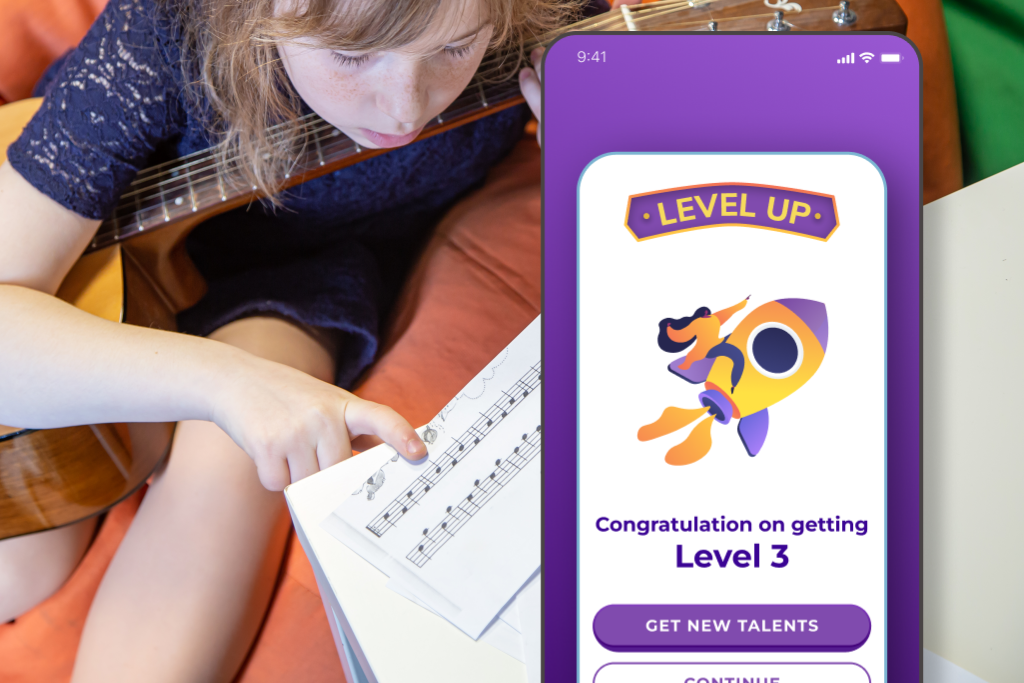
- Gamification of assignments: Achievement systems allow students to achieve more and strive to reach new results. Young musicians become more ambitious when points are given for homework upon completion, visualized as a scale or carousel of rewards.
- Interactive visualizations: Color indicators and animations support immediate perceptions of the correctness of execution, which instantly engage. For example, playing keys triggers bright flashes or highlights correct zones, creating a game-like effect instead of boring study.
- Competitions and teamwork: Talented is capable of organizing mini-challenges between students and even small group projects. That way, it will develop not only a spirit of healthy competition but also make the process more social and fun.
- Interface personalization: giving students the opportunity to select themes, sound packs, or avatars creates a sense of ownership and wanting to come back to the lessons, develops individual visual style.
Therefore, by integrating these techniques, the teacher takes the attention of the student and at the same time creates a continuous urge toward regular practice. These homework drills double as student reinforcement, sustaining engagement through clear feedback loops.
Conclusion — Integrating Talented Into Daily Teaching Practice
It is not some fashionable trend that Talented use in piano teaching, but a substantiated technical solution able to take the process of learning to a new level. The integration of digital tools into everyday work brings tangible benefits to the teacher:
- Time optimization: Automating homework creation and checking frees up the resources for more individual student work.
- Better feedback: Instant analytical reports enable early identification of challenges and program adaptations.
- Variety of reinforcement methods: More lively and adaptable to different learning styles, teaching is made by the integrated interactive and game mechanics.
- Building motivation: Even the most challenging students stay highly engaged because of the opportunities to get visual rewards and compete with others.
By making Talented part of daily practice, teachers open the door to more creative, effective, and modern learning. Not just a digital assistant is it, but a partner in the educational process that helps reach new heights and awaken students’ love for music. For educators seeking scalable teacher tools and streamlined progress reports, Talented for instructors provides practical teaching aids and student reinforcement paths that fit seamlessly into remote teaching and studio workflows.